


Why This Race Has A Grip On People
Picture a 4 a.m. alarm, a wetsuit that never quite fits right, and a start line full of strangers who all had the same thought at some point: can I actually finish this? That’s Ironman. Swim 3.86 kilometers. Bike 180.25 kilometers. Run a full marathon — 42.2 kilometers — right after. No breaks between legs, just a transition tent and whatever’s left in your legs.
This isn’t a guide written from the sidelines. It’s for the person staring at a “70.3” sticker on someone’s car bumper and wondering what it even means, the runner who’s hit a wall with 10Ks and wants a new kind of hard, and anyone in Chennai — or anywhere else — who’s tired of gym routines that don’t scare them a little.
What Ironman Actually Is?
Ironman isn’t one race. It’s a brand, a distance, and a whole culture that grew out of a bar argument in Hawaii in 1978. A group of athletes were debating which was tougher — swimmers, cyclists, or runners — so they stitched three existing races together and said whoever finished first, wins the argument. Fifteen people started. Twelve finished.
That stubborn little bet turned into something with over 230 events across more than 50 countries now.
Full Ironman: 3.86km swim + 180.25km bike + 42.2km run = 140.6 miles total. Ironman 70.3: half the distance, hence the name — 1.9km swim, 90km bike, 21.1km run.
Most people start with a 70.3 before they even consider the full distance. That’s not a rule anyone enforces. It’s just common sense once you’ve felt what four hours on a bike does to your legs before you’ve even started running.
The Numbers Nobody Tells You Upfront
Marketing shows you the finish line photo. Nobody puts the actual math on a poster.
- 140.6 miles. Say it slowly. That’s roughly the distance from Chennai to Vellore, except you’re swimming part of it and running the last chunk on legs that already did the other two.
- The average full-distance finisher burns somewhere around 8,000-10,000 calories on race day. You cannot eat your way to that deficit mid-race, which is exactly why nutrition planning matters more than most training plans admit.
- Roughly 10-15% of people who register for a full Ironman never make it to the start line — injury, life, fear, all three. Nobody talks about that number at expos.
- DNF (did not finish) rates hover around 2-5% for most races, usually clustered at the swim cutoff or somewhere past mile 18 on the run, when the wheels genuinely come off for people who went out too fast on the bike.
- First Ironman ever: February 18, 1978, Oahu, Hawaii. Fifteen started. Twelve finished. Gordon Haller won in 11 hours, 46 minutes, 58 seconds — a number that’s basically folklore in this sport now.
The Race Itself: Swim, Bike, Run, Repeat In Your Head Forever
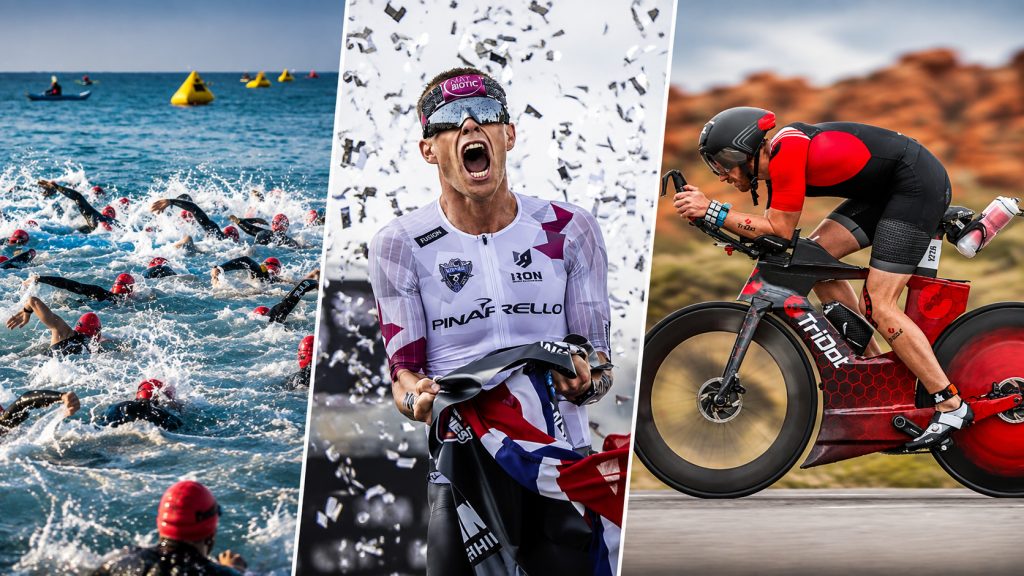
There’s no music to hide behind here, no upbeat station-hopping like you’d get in a CrossFit-style event. It’s long, it’s quiet in places, and it tests you in ways that sneak up hours in.
The Swim — Open water, usually a mass or wave starts. Cold shock, elbows in the ribs, and somehow you settle into a rhythm by the second buoy. Wetsuits are standard unless the water’s too warm.
Transition 1 (T1) — You run, dripping, into a tent full of gear bags. Wetsuit off, bike shoes on, helmet clipped. People fumble here more than they’d like to admit.
The Bike — This is where the race is actually won or lost for most age-groupers. Long, flat stretches test your pacing discipline; hills test whether you trained at all. Nutrition matters more here than anywhere else — mess up your fueling on the bike and the run falls apart.
Transition 2 (T2) — Legs like jelly, and now you’re supposed to run.
The Run — A marathon, on legs that already swam and biked. Everyone hits a low point. The good ones know it’s coming and have a plan for it — a mantra, a gel, a decision to just keep moving.
Cutoff times exist and they’re brutal if you’re not prepared — miss the swim cutoff and your race ends before the bike even starts.
What It Actually Feels Like, Hour By Hour
Not the brochure version. The real one.
Hour 1: adrenaline does the work for you. You feel invincible. You are not invincible, you just haven’t found that out yet.
Hour 4, somewhere in the middle of the bike: your mind starts negotiating. Maybe I’ll just finish the bike and call it a day.You don’t mean it. It passes.
Hour 6-7, start of the run: your legs forget how running works. This is normal. This is the “Ironman shuffle” every finisher talks about — not a jog, not a walk, something in between that gets you forward.
Hour 9 onward, if you’re an age-grouper and not chasing a podium: you stop caring about pace. You start counting aid stations instead of kilometers. Someone’s cheering for a total stranger up ahead and you borrow their energy for a minute.
The finish chute, whenever it comes: people cry. Not because it’s sad. Because eleven or thirteen or sixteen hours of your body arguing with your brain just ended, and your brain won.
Why Ironman Keeps Growing In 2026
Endurance sport in general has been climbing since the pandemic pushed people toward outdoor goals they could chase alone, and Ironman rode that wave harder than most.
- Bucket-list status. Finishing an Ironman has become shorthand for “I did something hard,” the same cultural weight a marathon used to carry alone.
- Destination racing. People plan vacations around these events now — Nice, Kona, Cozumel, Goa. You bring your family, you turn suffering into a trip.
- India’s own foothold. Ironman 70.3 Goa has been running at Miramar Beach in Panaji since 2019, and it’s grown fast — over a thousand participants in recent editions, athletes traveling in from more than 75 cities, and around 60% of the field being first-timers. Leander Paes has been the race ambassador the last few years, which tells you something about how mainstream this has gotten in India.
- Age-group culture. You’ll see 22-year-olds and 66-year-olds on the same start list. Nobody’s too old for this. That’s part of the pull.
What You Gain, What It Costs You
Ironman doesn’t hand you fitness. It takes a lot out of you first, and not everyone who signs up finishes the training, let alone the race.
What you get:
- A cardiovascular engine that most sports never build — swim, bike, and run each stress your heart differently, and stacking them compounds the effect.
- Mental toughness that isn’t theoretical. You will want to quit at some point during training, probably around week 10, and getting through that teaches you something you can’t fake.
- A community that’s oddly obsessive in a good way — group rides at 5 a.m., strangers who become training partners become friends.
What it demands:
- Time. Real training plans run 6 to 12 months, 10-15 hours a week at peak. This is not a “fit it around your life” sport — it restructures your life.
- Money. Bikes alone can run into lakhs if you go the tri-bike route, and that’s before race fees, travel, and gear.
- Joints and patience. Overuse injuries are common — IT band issues, shin splints, shoulder strain from swimming. Ramp up too fast and your body will let you know.
| Discipline | What It Builds | Where People Struggle |
| Swim | Breathing control, upper-body endurance | Open-water anxiety, sighting |
| Bike | Aerobic base, leg strength | Pacing — going too hard early |
| Run | Mental grit under fatigue | “Ironman shuffle” — legs give out |
Training For Your First One
There’s no shortcut here, and anyone who tells you otherwise hasn’t done it. A realistic beginner build for a 70.3 runs about 20 weeks. Full Ironman, plan for 24-30.
Rough phase breakdown:
- Weeks 1-6 (Base): Get comfortable in each discipline separately. Short swims, easy rides, easy runs. Build the habit before you build the intensity.
- Weeks 7-14 (Build): Brick workouts start here — bike straight into a run so your legs learn what that transition feels like. Longer rides on weekends, tempo runs midweek.
- Weeks 15-18 (Peak): Your longest sessions happen now. This is where confidence gets built or exposed.
- Final 2 weeks (Taper): Cut volume hard, keep intensity, trust the work you’ve already put in. This part feels wrong. It’s supposed to.
A few things people learn the hard way, so you don’t have to:
- Practice your race-day nutrition in training. Your gut needs rehearsal just like your legs do.
- Buy a decent bike fit before you buy a fancy bike. Comfort over 90-180km matters more than watts.
- Swim technique work pays off more than swim volume, especially early on.
Gear You Actually Need (Not What The Shop Wants To Sell You)
You don’t need everything on day one. Buy in this order and you’ll save money and regret.
- A wetsuit that fits. Rental is fine for your first race. Buy once you know you’re doing another.
- Any road bike with clip-in pedals, first. A tri-bike with aero bars matters once you’re already logging 150+ km weeks — not before. People blow ₹2-3 lakh on a bike before they’ve even built the base fitness to use it properly.
- A GPS watch. Doesn’t need to be the top-tier one. You need pace and heart rate, not a subscription to features you’ll never open.
- Two pairs of good running shoes. Rotate them. Your feet will thank you around week 12 of training.
- Race belt, not safety pins. Small things. Saves you fumbling in T2 when your hands are shaking from the bike.
Nutrition: The Discipline Nobody Trains For
Swim, bike, run get all the attention. Fueling is what actually decides your finishing time for most age-groupers, and almost nobody practices it seriously until it’s too late.
Rough targets that coaches actually use: 60-90 grams of carbs per hour on the bike, less on the run because your gut can’t process as much while it’s also absorbing the pounding of running. Sodium matters as much as sugar — cramping halfway through the run is usually an electrolyte problem, not a fitness one.
The mistake almost everyone makes: trying a new gel, a new drink mix, or a new breakfast on race morning because it’s what the expo was selling. Don’t. Whatever you ate in your last three long training sessions is what goes in your bag race day. No exceptions, no matter how good that new mango-flavored gel looked.
Mistakes First-Timers Make, In Order Of How Often I’ve Seen Them
- Going out too hard on the bike. It feels easy in the first 20km because your legs are fresh. It stops feeling easy by 60km, and now you’ve got a marathon left.
- Undertraining the swim. Most people can survive the bike and run on grit alone. You cannot bluff your way through open water panic.
- Skipping brick workouts. Running off the bike feels nothing like running on fresh legs. First time you feel it should not be on race day.
- Ignoring sleep during peak weeks. Training adaptation happens while you’re asleep, not while you’re training. People treat sleep as optional and wonder why they’re not improving.
- Buying gear two weeks before the race. New shoes, new saddle, new wetsuit — anything untested is a liability. “Nothing new on race day” is a cliché because it’s true.
Getting Into A Race
Registration happens through ironman.com, and popular races — Goa, Cozumel, Nice — fill up fast once they open.
Rough costs: Entry fees run anywhere from ₹15,000 to ₹45,000 depending on the race and how early you sign up. Add gear, travel, and possibly a coach, and your first Ironman year isn’t cheap. Plenty of people treat it like a savings goal, not an impulse buy.
Categories: Age-group (the vast majority of racers), Pro (elite, chasing prize money and Kona slots), and relay teams in some races if you want to split the distances with friends.
Qualifying for the Ironman World Championship in Kona is its own separate mountain to climb — most people who finish an Ironman never chase that slot, and that’s completely fine. Finishing is the achievement plenty of people spend years working toward.
Ironman vs Marathon vs HYROX — Because People Always Ask
These get lumped together a lot, and they shouldn’t be. Different demands, different kinds of hard.
| Ironman (Full) | Marathon | HYROX | |
| Time on course | 10-17 hours | 3-6 hours | 60-120 minutes |
| Main skill tested | Fueling + pacing across 3 sports | Pure running economy | Strength-endurance under fatigue |
| Where people fail | The run, after the bike breaks them | The wall, around 30-35km | Grip and legs on the last two stations |
| Training load | 10-15 hrs/week, months out | 4-6 hrs/week | 4-5 sessions/week, shorter |
| Entry cost | ₹15,000-45,000+ gear | ₹2,000-5,000 | ₹4,700-9,400 |
A marathoner picking up triathlons usually struggles with the swim first. A HYROX athlete moving to Ironman usually underestimates how different three hours on a bike feels from anything in a HYROX station. Nobody transfers cleanly. Everybody has to relearn something.If you are interested more in this kind of information subscribe newsy.in
Questions People Actually Ask
What’s the difference between Ironman and Ironman 70.3? Full Ironman is 140.6 miles total — swim, bike, marathon. 70.3 is exactly half that distance, and it’s where most people start.
How long does it take to finish? The full Ironman cutoff is usually 17 hours. Most age-groupers finish somewhere between 12 and 16 hours. Elites finish in under 8.
Do I need to already be a swimmer/cyclist/runner? No, but you can’t be a total beginner in all three either. Pick a plan that meets you where you are and gives each discipline enough weeks to catch up.
Is Ironman coming to more Indian cities? Goa has been the anchor race since 2019, and interest is clearly growing — bigger fields, more first-timers, more international attention each year. Check ironman.com for the current race calendar.
What does an Ironman cost, all in? Between entry fees, a road or tri bike, wetsuit, and travel, budget for it the way you’d budget for a serious hobby — because that’s what it becomes.
Can I do this without a coach? Plenty of people self-coach using free plans online. A coach helps, especially for pacing and avoiding injury, but it’s not mandatory for a first finish.
What’s the hardest part — swim, bike, or run? Ask ten finishers, get ten different answers. For most, it’s the run — not because running is hard, but because it comes last.
Is it too late to start if I’m not young anymore? No. Age-group fields regularly include competitors in their 60s and beyond. The finish line doesn’t check your birth certificate.
What happens if I can’t finish? You get pulled at the cutoff, get a DNF next to your name, and — for most people — sign up again the following year angrier and better prepared. Plenty of finishers have a DNF in their history. It’s not the end of anything.
Can I walk part of the run? Yes, and most age-groupers do at some point, usually through aid stations. Walking the aid stations and running between them is a legitimate, common strategy — not a failure.
Do I need to know how to swim well, or just survive it? You need to be comfortable in open water for close to an hour without panicking. Speed matters far less than composure. A slow, calm swimmer beats a fast, panicked one every time on race morning.
What’s a “brick” workout and why does everyone mention it? Bike immediately followed by a run, no rest between. It trains your legs for the specific, awful feeling of running on legs that just spent hours cycling. Skip these in training and race day becomes a very rude surprise.
Is Kona the only “real” finish that matters? Depends who you ask. To the sport’s culture, yes, it’s the mecca. To almost every individual finisher crossing their own local finish line, no — that line means everything, regardless of whether Kona ever enters the picture.